


Frontend Development with React & Next.js
 Mahabub Hossain
Discover how React and Next.js work together to create fast, SEO-friendly, modern web interfaces — components, hooks, routing, server-side rendering, and more.
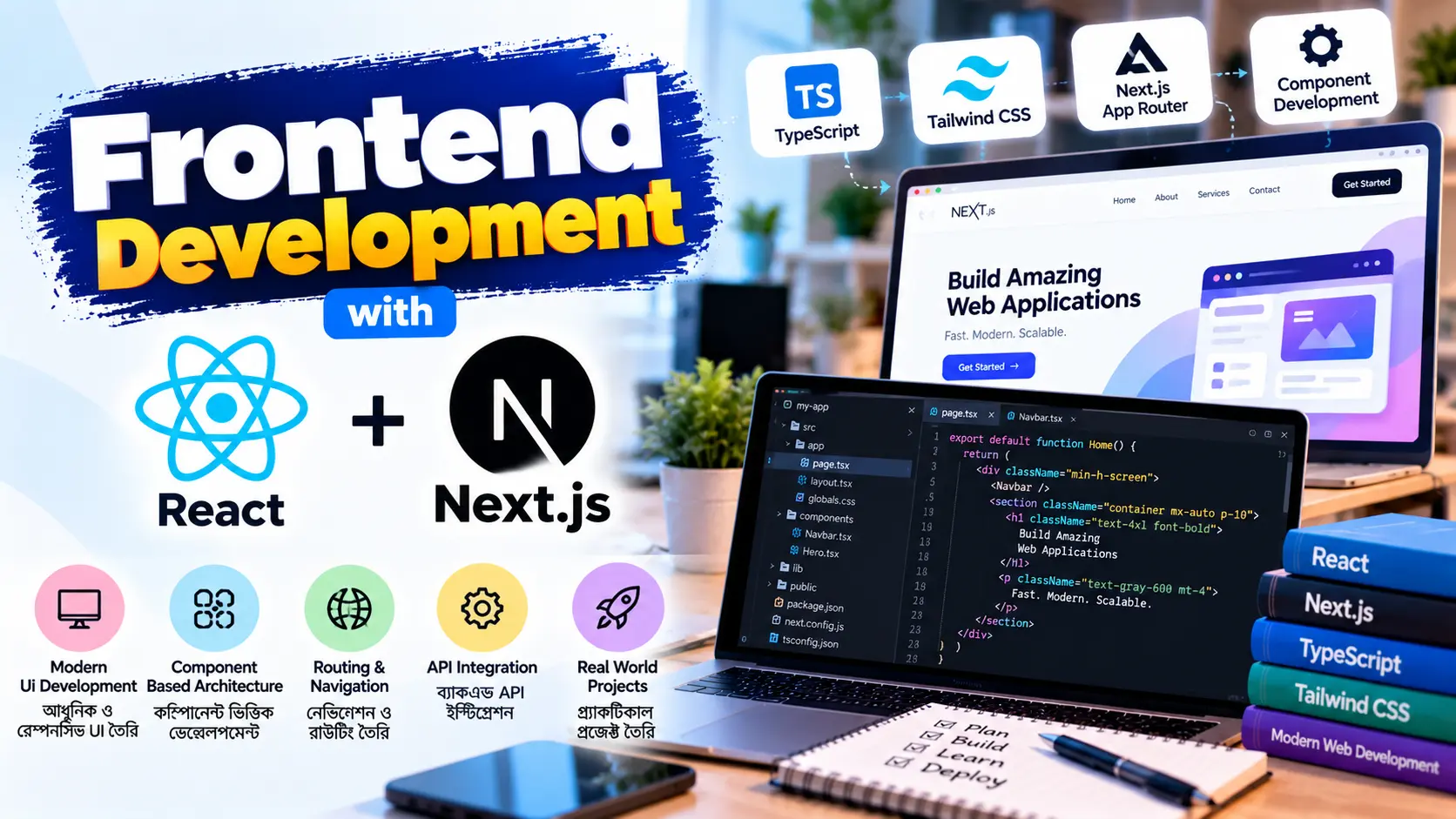
Frontend development is all about what users see and interact with, and React is the world's most widely used library for building those interfaces. React breaks a page into reusable components, manages state with hooks like useState and useEffect, and updates the UI efficiently through its virtual DOM. Learning React means learning to think in components — small, composable pieces that make complex UIs manageable.
Next.js builds on top of React and solves its remaining challenges: routing, data fetching, and performance. With file-based routing, every file in the app directory automatically becomes a page. Server-Side Rendering (SSR) and Static Site Generation (SSG) deliver pages that load fast and rank well in search engines, while Server Components and API routes let you handle backend logic right inside the same project.
The React + Next.js combination is the industry standard for modern web development. It powers everything from marketing sites and blogs to full-scale dashboards and e-commerce platforms, and it is one of the most in-demand skill sets in the job market today.
In our Frontend Development course, you will start with the fundamentals of React — components, props, hooks, and styling — and progress to building complete Next.js applications with dynamic routes, image optimization, API integration, and deployment on Vercel. By the end of the course, you will have a portfolio of real projects and the confidence to work as a professional frontend developer.